Aug. 12, 2026
The global outdoor hospitality industry is experiencing an unprecedented shift. Driven by travelers seeking immersive nature experiences without sacrificing hotel-grade luxury, glamping has evolved from a novel travel trend into a high-margin, multi-billion-dollar asset class. Compared to traditional brick-and-mortar hotels, luxury tent resorts offer significantly faster construction timelines, lower regulatory hurdles, and impressive average daily rates (ADR). However, for landowners, developers, and hospitality investors, the single most critical question during initial project feasibility remains: What is the real cost to build a glamping resort in 2026?
While turnkey project budgets typically range from $150,000 for an intimate 5-unit boutique campsite to $1,500,000+ for a 25-unit luxury flagship resort, the final investment depends on land topography, utility accessibility, accommodation structure choices, and interior luxury standards. This comprehensive guide breaks down every capital expenditure (CAPEX) category, uncovers hidden utility costs, and outlines proven ROI equations to help you plan, budget, and execute a profitable glamping venture.
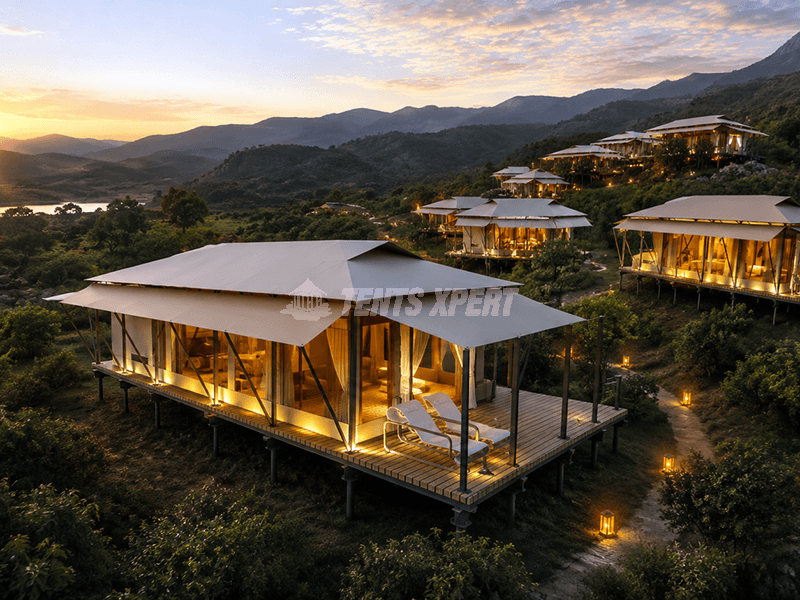
Before opening spreadsheets and requesting manufacturer quotes, developers must understand that no two glamping sites are financially identical. Five primary variables dictate your total capital requirements:
Site Accessibility & Utilities: Developing raw, off-grid wilderness land requires substantially higher civil engineering investments than upgrading an existing RV park or agricultural property with pre-existing electric and water hookups.
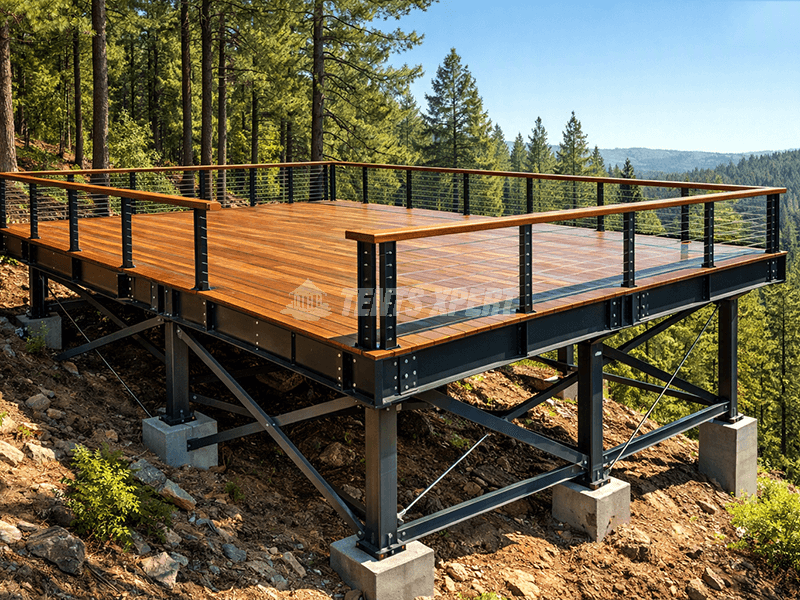
Topography & Soil Conditions: Steep slopes, rocky terrain, or coastal wetlands require specialized foundation engineering, such as raised steel helical piers or engineered wooden platforms, which increase civil works costs.
Accommodation Structure Quality: Selecting entry-level bell tents versus 4-season engineered luxury safari tents or geodesic domes fundamentally alters both upfront procurement costs and long-term durability.
En-Suite Bathroom Facilities: Running underground plumbing for private in-tent luxury bathrooms increases infrastructure costs but yields up to 40% higher Average Daily Rates (ADR) compared to shared shower houses.
Permitting & Environmental Clearances: Local zoning codes, Conditional Use Permits (CUP), environmental impact studies, and civil engineering approvals vary significantly by region and municipal policy.
If you already own suitable land, your capital is immediately redirected toward site development. If purchasing or leasing land, budget between 5% and 10% of gross annual revenue for long-term commercial lease agreements, or source raw rural land at $5,000 to $30,000 per acre depending on scenic location.
Regardless of land ownership, initial soft costs and earthworks form the mandatory foundation of your budget:
Zoning, Permits & Legal Engineering ($5,000 – $35,000): Navigating county land-use regulations, civil planning reviews, fire safety egress compliance, and environmental protection studies.
Topographic Surveys & Layout Planning ($3,000 – $8,000): Professional site mapping to determine optimal tent spacing, privacy buffer zones, sun/shade orientation, and civil drainage patterns.
Earthworks, Road Access & Parking ($10,000 – $45,000): Grading access roads for guest vehicles and emergency services, creating gravel parking pads, and clearing vegetation while preserving natural beauty.
Decking Platforms & Foundations ($15 – $35 per sq. ft.): Raised wooden or galvanized steel frames are crucial for elevating tents above ground moisture, ensuring structural stability against high winds, and protecting delicate ground ecosystems.
Bringing power, freshwater, and sewage handling to remote, scenic locations often represents 25% to 35% of total project CAPEX. Developers have two primary operational paths:
Extending municipal power lines and water mains over long distances can cost between $25 and $60 per linear foot. If your site sits more than 1,000 feet from existing utility drops, connection fees can quickly exceed $80,000.
Integrating advanced off-grid technology not only avoids expensive utility trenching but also enhances your resort’s eco-friendly brand appeal:
Solar Power Microgrids ($12,000 – $45,000): Centralized solar array systems with lithium battery storage banks, or independent solar-powered tent structures (such as TENTSXPERT POWERDOME units) that eliminate external wiring entirely.
Water Well & Filtration ($10,000 – $35,000): Commercial water well drilling ($25 – $50/foot) paired with UV filtration and pressure booster pumps.
Wastewater & Septic Systems ($15,000 – $45,000): Underground septic holding tanks, engineered drain fields, or zero-discharge composting and greywater reclamation systems.
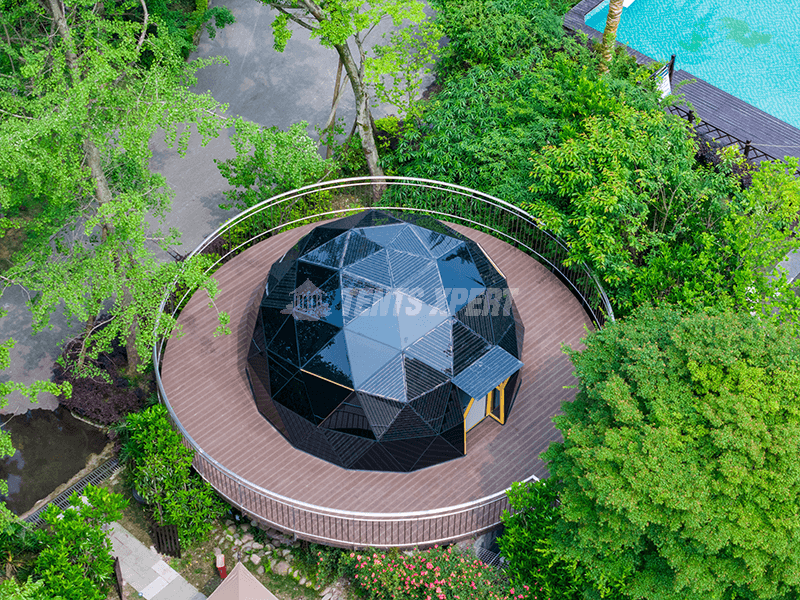
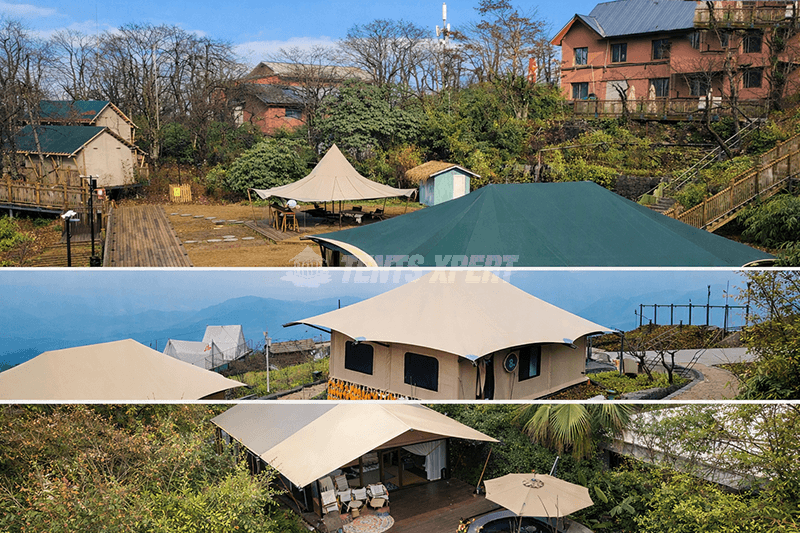
Your choice of tent structure directly defines your target market, night rate ceiling, seasonal operating duration, and overall brand identity. Sourcing directly from an established tent manufacturer eliminates domestic trade markups, saving 30% to 50% in unit procurement.
Below is an overview of popular commercial glamping structures and their associated factory-direct pricing:
Cost Per Unit: $1,500 – $3,500
Target Night Rate (ADR): $120 – $180
Best Suited For: Entry-level campsites, pop-up summer resorts, and budget-conscious eco-retreats.
Cost Per Unit: $4,500 – $12,000
Target Night Rate (ADR): $200 – $380
Best Suited For: Stargazing destinations, high-wind zones, and 4-season snowy climates.
Cost Per Unit: $8,000 – $22,000
Target Night Rate (ADR): $280 – $550
Best Suited For: Multi-room family suites, high-end wilderness lodges, and luxury glamping resorts.
Cost Per Unit: $12,000 – $25,000
Target Night Rate (ADR): $300 – $600
Best Suited For: Off-grid luxury retreats seeking zero carbon footprints and smart automated living.
Cost Per Unit: $20,000 – $55,000
Target Night Rate / Usage: $500+ / Event Space
Best Suited For: VIP receptions, central resort dining halls, yoga retreats, and wedding venues.
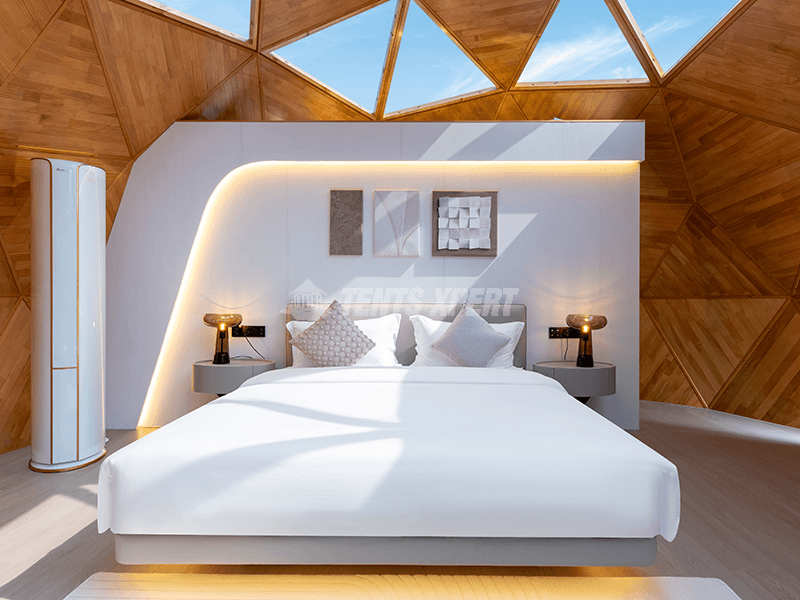
To command premium hotel rates ($250+ per night), the interior of a canvas structure must match the comfort, acoustics, and luxury of a 5-star boutique hotel suite:
En-Suite Private Bathrooms ($3,500 – $9,000 per unit): Custom timber or glass partition walls, vanity sinks, rain showers, and flush or incinerating toilets. Private bathrooms represent the single highest driver of positive guest reviews and elevated room pricing.
4-Season Climate Control ($1,500 – $4,500 per unit): High-efficiency mini-split heat pumps, wood-burning stove installations, or multi-layer thermal insulation liners for sub-zero winter temperatures.
Furnishings, Lighting & Soft Goods ($2,000 – $6,000 per unit): Plush king bedding, designer headboards, woven rugs, ambient lighting, outdoor deck lounges, and private hot tubs or fire pits.
To help you visualize total capital requirements, the following table compares three common commercial resort development models side-by-side:
| Budget Category | Model A: Boutique Camp (5 Units) | Model B: Mid-Scale Resort (12 Units) | Model C: Luxury Flagship (25 Units) |
| Feasibility, Zoning & Permits | $8,000 | $18,000 | $35,000 |
| Site Prep, Decking & Earthworks | $25,000 | $75,000 | $180,000 |
| Utilities (Water, Power, Septic) | $30,000 | $85,000 | $220,000 |
| Tent Structures (Factory Direct) | $35,000 (Bell/Safari) | $130,000 (Safari/Domes) | $380,000 (Luxury/Solar) |
| Interior Bathrooms & Fit-Out | $28,000 | $96,000 | $275,000 |
| Central Hospitality Hub / Reception | $12,000 | $45,000 | $150,000 |
| Branding, Website & Launch Marketing | $8,000 | $20,000 | $45,000 |
| Contingency Reserve (10%) | $14,600 | $46,900 | $128,500 |
| ESTIMATED TOTAL INVESTMENT | $160,600 | $515,900 | $1,413,500 |
Glamping businesses consistently outperform traditional hotels in Gross Operating Profit (GOP) margins, often achieving 50% to 65% profit margins due to lean staffing requirements and low ongoing structural maintenance.
Average Daily Rate (ADR): $280 / night
Annual Occupancy Rate: 55% (200 paid nights / unit / year)
Gross Annual Revenue Calculation: 12 Units × $280 ADR × 200 Occupied Nights = $672,000 Gross Revenue
Operating Expenses (OPEX ~38%): -$255,360 (Includes site staff, utilities, laundry, OTA platform fees, and insurance)
Net Operating Income (NOI): $416,640 per year
Projected Payback Period: 14.8 Months (The initial $515,900 capital investment is fully recouped in under 1.5 operating seasons).
Eliminate Middlemen by Buying Factory Direct Purchasing engineered structures directly from certified tent manufacturers eliminates distributor markups, saving tens of thousands of dollars on large projects.
Opt for Modular and Off-Grid Designs: Using prefabricated modular decking and standalone solar energy units minimizes heavy machinery rental, land disturbance, and trenching costs.
Adopt a Phased Expansion Strategy: Launch with Phase 1 (5 to 10 high-performing units) to validate local market ADR and generate operating cash flow. Use revenues from your first season to finance Phase 2 expansion without taking on excessive debt.
Navigating the financial and engineering complexities of outdoor resort development requires a reliable manufacturing partner. As a leading factory-direct manufacturer of luxury glamping tents, safari tents, and solar dome structures, TENTSXPERT supplies developers worldwide with durable, all-weather, engineered accommodation solutions.
From 3D site layout guidance and custom tent customization to global delivery and installation support, our engineering team is ready to bring your vision to life.
Ready to start calculating your project budget?
Visit our tent collection or contact our engineering specialists directly at info@tentsxpert.com to request factory-direct pricing and a free site consultation today!
Previous: None
Next: Glamping Meets Game Day: Luxury Tent Stays at Premier Sports Destinations

Chat Now